
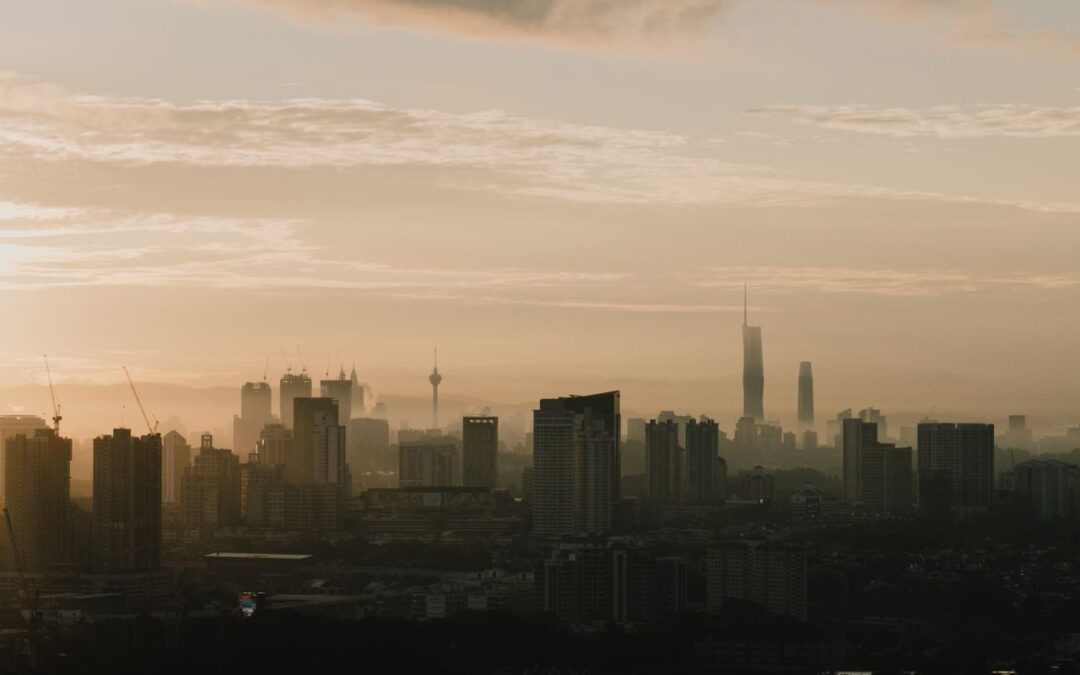
What the September 2026 air quality emergency actually means for travellers heading to KL, Sarawak, Johor, or Penang.
If you’re flying into Malaysia this month, you’ve probably seen headlines about the Malaysia haze 2026 season and wondered whether it changes your plans. Short answer: for most travellers, no, but it does help to understand what’s actually going on before you land, because this year’s episode has grown well beyond the usual Borneo story.
As of 15 September 2026, 38 monitoring stations across Malaysia were recording unhealthy air quality, and for the first time this season, Johor rather than Sarawak was the hardest hit state. Kuala Lumpur, Selangor, Penang, Melaka and several other states also logged unhealthy readings. This Malaysia haze 2026 guide covers what caused it, how bad it actually is depending on where you’re headed, and what to do about it if you’re travelling to Malaysia in September or October.
One thing the haze doesn’t touch is your paperwork. Your Malaysia Digital Arrival Card (MDAC) still needs to be submitted within three days of arrival, exactly as it would on a clear day, and your visa status is unaffected either way. If you haven’t sorted that part yet, it’s worth getting done before you focus on the air quality side of your trip.

What’s Causing the Malaysia Haze 2026 Season
The source of the Malaysia haze 2026 season is transboundary smoke, not local pollution. The ASEAN Specialised Meteorological Centre has traced it to clusters of hotspots burning in Kalimantan and southern Sumatra, both in Indonesia, during the region’s annual dry season. Prevailing winds carry the smoke north and east into Peninsular Malaysia and Borneo, and the centre’s own forecast in mid-September described the situation as likely to “remain escalated” with continued risk of transboundary smoke drifting into the region.
Indonesia’s forestry ministry reported over 700 hotspots detected nationwide since 1 August, with more than 100 still active on the worst days. Some of these fires are attributed to illegal land clearing; Indonesian police have made over a hundred arrests connected to deliberate burning this season.
How the Malaysia Haze 2026 Situation Escalated Through September
- 26 August: 16 areas in Malaysia recorded unhealthy API readings.
- 1 September: Kuching’s API hit 407 and six areas in Sarawak entered the hazardous band, the worst reading of the season at that point.
- 4 to 5 September: Serian, a small town near the Sarawak-Kalimantan border, recorded an API of 521, well past the threshold that can justify halting nonessential outdoor work. Malaysia’s Cabinet declared an emergency in the district.
- 6 to 7 September: The emergency declaration was lifted as the haze eased, though officials cautioned that air quality remained poor and the underlying risk hadn’t gone away.
- 9 September: Serian was still recording the country’s highest reading, at 213, back in the very unhealthy band.
- 14 September: 23 stations nationwide were in the unhealthy bracket, up from just 5 the previous Sunday. Malaysia and Indonesia held bilateral talks in Penang the same day, alongside a broader push on weather modification.
- 15 September: The count rose to 38 unhealthy stations. Johor, led by Pasir Gudang at 172 and Larkin at 169, overtook Sarawak as the hardest-hit state in this Malaysia haze 2026 episode, though Serian remained close behind at 188.
Reading Malaysia’s Air Pollutant Index During the 2026 Haze
Malaysia measures air quality on the API scale, and the numbers only mean something once you know the bands:
| API range | Category |
|---|---|
| 0-50 | Good |
| 51-100 | Moderate |
| 101-200 | Unhealthy |
| 201-300 | Very unhealthy |
| 301 and above | Hazardous |
Schools are typically closed once the local reading passes 200. Serian’s peak of 521 during the first week of September sat so far past the hazardous band that it triggered a formal emergency declaration, which is a separate and much rarer step than a routine “unhealthy” or “hazardous” reading. Most of the figures travellers will actually encounter this month sit in the unhealthy range, uncomfortable but manageable with basic precautions rather than a reason to change plans outright.
Where the Malaysia Haze 2026 Is Actually Bad Right Now
The picture changes by the day and by the station, so treat this as a snapshot rather than a forecast. As of 15 September:
- Johor: Pasir Gudang (172), Larkin (169), Tangkak (166), Kota Tinggi (165), Pengerang (162), Batu Pahat (160), Kluang (151).
- Sarawak: Serian (188), Samarahan (163), Kuching (154).
- Klang Valley: Cheras (170), Shah Alam (167), Putrajaya (165), Petaling Jaya and Klang (160 each).
- Selangor: Johan Setia (183).
- Smaller pockets of unhealthy readings also turned up in Negeri Sembilan, Pahang, Terengganu, Melaka, Perak, Penang and Kedah.
Northern states and the east coast have generally seen milder numbers. If your trip is anchored around Langkawi, Kota Kinabalu, or the far north, you’re statistically less likely to run into the worst of it, though conditions can shift within days.
What the Malaysia Haze 2026 Season Means If You’re Travelling This Month
Flights, visas and MDAC submissions are unaffected. None of this changes entry requirements, and the Malaysia Digital Arrival Card process we covered in our Merdeka Day travel guide works exactly the same regardless of the haze. What changes is how much time you should plan to spend outdoors on a bad-reading day.
For context, Malaysia Day 2026 celebrations went ahead in Kuching as planned on 16 September, which we covered in our Kuching travel guide, with the country’s Communications Minister recommending N95 masks for anyone spending extended time outdoors rather than cancelling the event outright. That’s roughly the right model for your own trip: check the day’s reading, adjust rather than cancel.
A short practical routine works for most travellers:
- Check the live reading for your destination before you head out. APIMS (the Department of Environment’s own portal) and aqicn.org both publish current station-by-station figures.
- Pack a few N95 masks if you’re heading to Sarawak, Johor, or the Klang Valley this month, and use them if you’ll be outdoors for more than an hour or two on an unhealthy-or-worse day.
- Have an indoor backup for the afternoon: malls, museums, indoor attractions, or simply pushing an outdoor activity to the following day if the reading is high in the morning.
- Take it more seriously if you’re travelling with children, older relatives, or anyone with asthma or a heart condition. This group is consistently the one health authorities flag first.
- Expect visibility rather than health effects to be the main issue for short hazy spells. It doesn’t usually mean much beyond a grey sky and mild eye or throat irritation for a healthy adult on a short visit.
What Malaysia and Indonesia Are Doing About the Malaysia Haze 2026 Season
This isn’t a one-sided problem, and both governments have been treating it that way. Indonesia has acknowledged the hotspot clusters and says it’s working with Malaysia on a joint response, including cloud seeding and other weather modification efforts announced in late August aimed at inducing rain over the fire-affected areas. The two countries held bilateral talks in Penang on 14 September specifically on the haze, and transboundary pollution was a central topic at an ASEAN health ministers’ meeting just days earlier. None of this fixes the problem overnight, since it depends on rainfall and fire containment on the Indonesian side of the border, but it’s an active, cooperative response rather than a dispute either country is dismissing.
Is This a One-Off, or Does It Happen Every Year?
Transboundary haze from Sumatra and Kalimantan is a near-annual feature of the region’s dry season, which typically runs from around June through October depending on the year’s rainfall patterns. Some years are mild and barely noticeable outside Borneo. Others, like 2026, escalate into the kind of multi-state, multi-week episode described above. If you’re planning a trip to Malaysia for July through October in any given year, build a quick API check into your pre-trip routine the same way you’d check the weather forecast, rather than treating the Malaysia haze 2026 episode as an unusual one-off.
Quick Traveller Checklist
- Check APIMS or aqicn.org for your specific destination a day or two before you fly, and again once you land.
- Pack N95 masks if Sarawak, Johor, or the Klang Valley are on your itinerary this month.
- Build in an indoor alternative for any day the local reading crosses into the unhealthy band.
- Take extra precautions for children, older travellers, or anyone with respiratory or heart conditions.
- Remember the Malaysia Digital Arrival Card and your visa status are unaffected by any of this. Handle them the same way you would on a clear day.
Frequently Asked Questions
Is it safe to travel to Malaysia during the Malaysia haze 2026 season? For most travellers, yes. The readings recorded this September mostly sit in the unhealthy band rather than the more serious hazardous or emergency levels, and they’re manageable with basic precautions like limiting prolonged outdoor exposure and using an N95 mask when needed.
Which parts of Malaysia are most affected right now? As of 15 September, Johor and parts of the Klang Valley were the hardest hit in Peninsular Malaysia, while Serian in Sarawak remained close behind. Northern states and the east coast have generally recorded milder numbers, though this can change within days.
Do I need to cancel my flight or trip because of the haze? No. Flights, MDAC submissions and visa entry are unaffected by the haze. The practical impact is on how much time you spend outdoors on a given day, not on whether you can travel at all.
What caused the Malaysia haze 2026 season? Transboundary smoke from forest and peatland fires burning in Kalimantan and southern Sumatra, both in Indonesia, during the region’s dry season. Malaysia and Indonesia have been coordinating a joint response, including weather modification efforts.
How is this different from a typical hazy day? Most hazy days in the region pass through the moderate or lower-unhealthy bands. This year’s episode briefly pushed Serian, Sarawak, to an API of 521 during the first week of September, well into hazardous territory and serious enough to trigger a formal government emergency declaration, before easing back into the more typical unhealthy range seen through mid-September.
Before You Fly
Check the current reading for wherever you’re headed, not the headline from a week ago. The Malaysia haze 2026 situation moves fast and has already shifted from a Sarawak-specific story to a nationwide one in the space of two weeks. Pack a mask if you’re heading somewhere in the unhealthy zone, plan an indoor option for the worst hours of the day, and treat the rest of your Malaysia trip, MDAC included, exactly as you would on a clear day.